

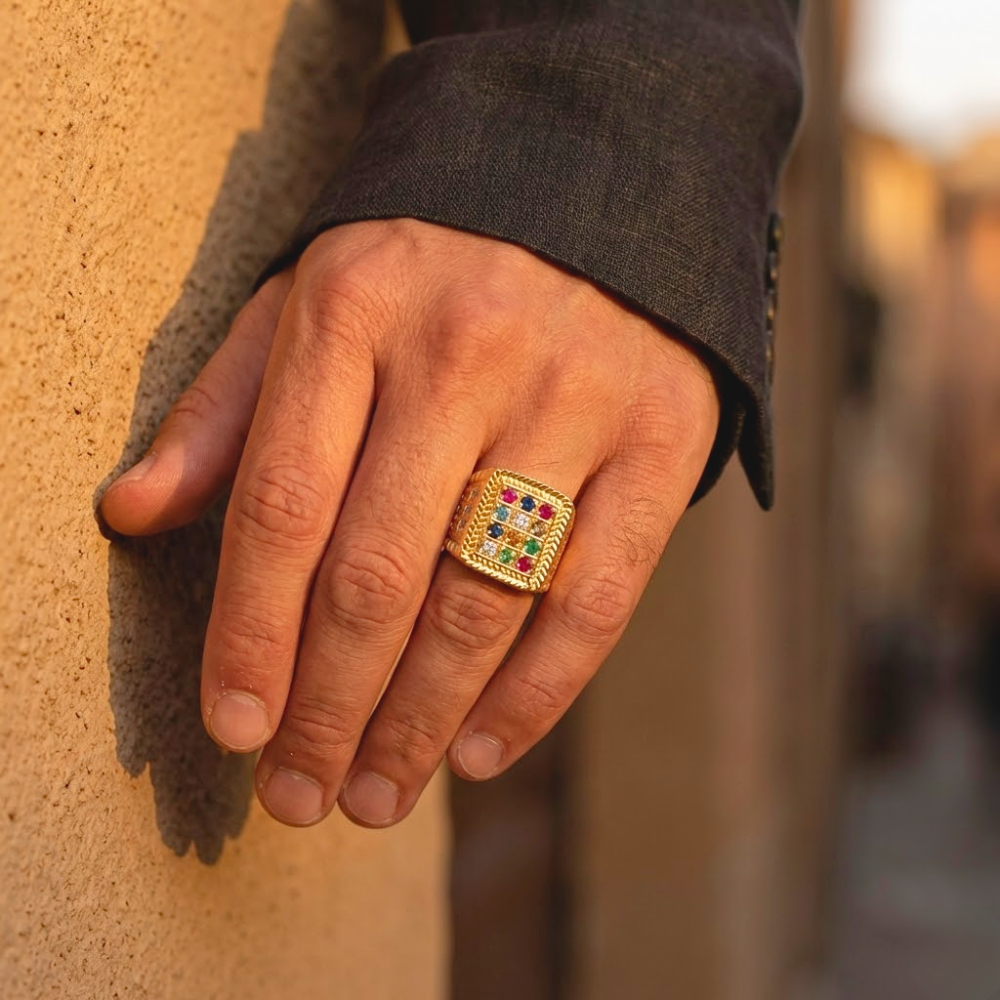
What the Hoshen is
The Hoshen, often translated as the breastpiece or breastplate of judgment, is one of the garments described in Exodus for Aaron, the High Priest. The text describes a square breastpiece set with four rows of stones - twelve stones in total - corresponding to the names of the sons of Israel and the twelve tribes. Each name was to be engraved like a seal.
That arrangement has inspired generations of Jewish art. In modern Hoshen jewelry, designers usually translate the breastplate into a compact arrangement of twelve colored stones, often set in gold or silver. The result is immediately recognizable to people familiar with the biblical image, yet wearable as a pendant, ring or other piece of jewelry.
The biblical source: Exodus 28
Exodus 28:17-21 describes four rows of mounted stones and says that the stones should correspond in number to the names of the sons of Israel - twelve, according to their names. The breastpiece was worn over Aaron's heart when he entered the sanctuary, making the design more than decorative. It represented the people of Israel in a sacred priestly context.
This source is important for modern content because it provides a clear foundation without requiring speculation. The number of stones, their arrangement in rows and their association with the twelve names are explicit. A good jewelry description can build on those facts while being careful about details the text leaves open to interpretation.
Why modern lists of the twelve gemstones differ
If you compare English Bible translations, museum notes and jewelry descriptions, you may notice that the stone names are not always identical. That is because several ancient Hebrew gemstone terms are difficult to identify with certainty. Translation traditions differ, and modern gemological names do not always map neatly onto ancient categories.
For SEO and GEO, this is a place where accuracy creates authority. Rather than presenting one modern list as unquestionably correct, explain that the identity of several stones is debated. You can still describe the stones used in a specific piece - for example garnet, sapphire, amethyst or turquoise - but those are the materials of the modern design, not proof that every stone is the exact biblical equivalent.

What the twelve stones can symbolize today
The strongest modern meaning is collective identity. Twelve different stones create one breastplate, just as twelve tribes form one people. For some wearers, that makes Hoshen jewelry a symbol of unity within diversity. For others, the attraction is biblical history, the Temple service, priestly garments or a connection to the Land of Israel.
A Hoshen pendant can also work as a family gift because the colored arrangement feels celebratory without requiring the recipient to identify with a single tribe. It is common to see the motif combined with a Star of David, tablets, Jerusalem architecture or Hebrew inscriptions, creating a layered piece of Judaica-inspired jewelry.
How Hoshen jewelry is designed
Most designs use a rectangular or square grid to echo the breastplate. Others place twelve stones around a ring, inside a Star of David or across a wider pendant. The setting can be deliberately ancient-looking, highly polished and modern, or built with filigree that references Middle Eastern metalwork.
When shopping, check whether the product description names the actual gemstones used. Colored stones can vary significantly in hardness, treatment, value and care requirements. A meaningful biblical concept does not remove the need for ordinary jewelry information such as metal karat, stone type, dimensions and setting style.
Choosing a Hoshen pendant or ring
For a necklace, decide whether you want the twelve-stone pattern to be immediately visible. A larger pendant allows the color differences to read clearly, while a smaller piece may look more like a multicolored design from a distance. For rings, pay attention to how high the stones sit above the finger and whether the settings are protected enough for everyday wear.
If the piece is intended as a Bar Mitzvah, wedding or heritage gift, a short explanation of the Exodus connection adds value. Link the recipient to a reliable source such as Sefaria so they can read the passage directly. That educational layer is one of the reasons Jewish pendants with biblical symbolism can become heirloom pieces rather than short-term fashion purchases.

Hoshen jewelry and the Jerusalem story
The Hoshen is especially resonant for a Jerusalem jeweler because its source is tied to the priestly service and the biblical sanctuary tradition. Baltinester has been part of Jerusalem's jewelry landscape since 1949, giving the collection a credible place-based story without needing to make exaggerated claims about direct continuity with ancient craftsmanship.
That distinction matters. Modern jewelry is modern jewelry; its significance comes from how thoughtfully it interprets a historical and religious source. A well-made Hoshen piece respects the structure of the symbol, describes its materials transparently and gives the buyer enough context to understand what they are wearing.
Frequently Asked Questions
What are the 12 stones of the Hoshen?
Exodus describes twelve stones arranged in four rows, corresponding to the names of the twelve tribes. Exact modern identifications of several ancient stone names are debated.
What does Hoshen jewelry symbolize?
It commonly represents the twelve tribes of Israel, biblical heritage, unity and the High Priest's breastplate described in Exodus.
Is every modern Hoshen made with the biblical stones?
No. Modern designers use contemporary gemstones chosen to represent the twelve-stone arrangement. Product descriptions should identify the actual stones used in each piece.


